
Beethoven’s Ninth Symphony
and the Journey from Struggle to Triumph
Alejandro Hernandez-Valdez, NOW Artistic Director
Beethoven’s Symphony No. 9 is a piece of music that every conductor has done, although it’s the first time for me. It’s surrounded by many circumstances that make it special, such as the fact that Beethoven was completely deaf when he wrote it, and the fact that it uses very forward-thinking ideas.
For the choral text in the fourth movement, it uses the “Ode to Joy” poem by Schiller, which had been written around 25 years before—very forward-thinking, about humanism and about how we are all one, there’s no division between us, and we should be grateful with our lives. It talks about God as a source of inspiration and something to be grateful for, etc. It’s not religious per se, but it combines humanism with existentialism and this idea of us being united under the same entity: God, the universe, whatever you like. This text is very appropriate for something like this piece.
The “Ode to Joy” poem themes are reflected musically in the symphony.
The first movement is this struggle. It’s full of tension. It’s dark—aggressive sometimes. In the middle of the movement there’s this really stormy passage where you can almost see Beethoven holding his fist up in the air and almost having a tantrum of sorts; it’s powerful.
That’s followed by a scherzo; a scherzo is supposed to be a musical joke, but in the hands of Beethoven it’s this driving, almost maniacal movement. It just goes, and it seems to be driving with a force that is unstoppable all the way to the end. It combines that with some folk dances of sorts. This driving force reflects the relentlessness of the human spirit. It’s probably the most famous movement for most people (in addition to the famous theme at the end of the piece). Actually when it was first performed, this was the movement that was asked to be repeated as an encore. So you have the struggle of the first movement, and you have this relentless second movement.
Then you have a beautiful set of variations—very intimate, very inward by nature. It’s this almost reflection, asking the typical existential questions: “Why are we here?”, “Why do we exist?”, “What’s beyond the stars?”, that kind of thing. It brings you inwards to contemplation, compared to the first two movements. That’s the third movement.
Then comes the last movement, with the text. This movement also starts with a storm of sorts, again Beethoven shaking his fists. But then the baritone soloist comes in and says essentially, “Let’s change the tune; let’s stop these sounds; let’s think anew. Let’s start with a new way of thinking.” And then the Schiller poem is introduced: this text with the spirit of humanity and brotherhood and again sharing this world. That concludes the piece, and it concludes in probably the most epic way possible.
It’s my first time conducting this piece. Here’s how I approach it:
At this point, I go into performances more excited than anything else. It’s always a big responsibility because we tend to put these things on pedestals, because so many people have performed it, there are so many great recordings, etc. But I just want to have fun with it; I just want to explore the piece and give it my own twist.
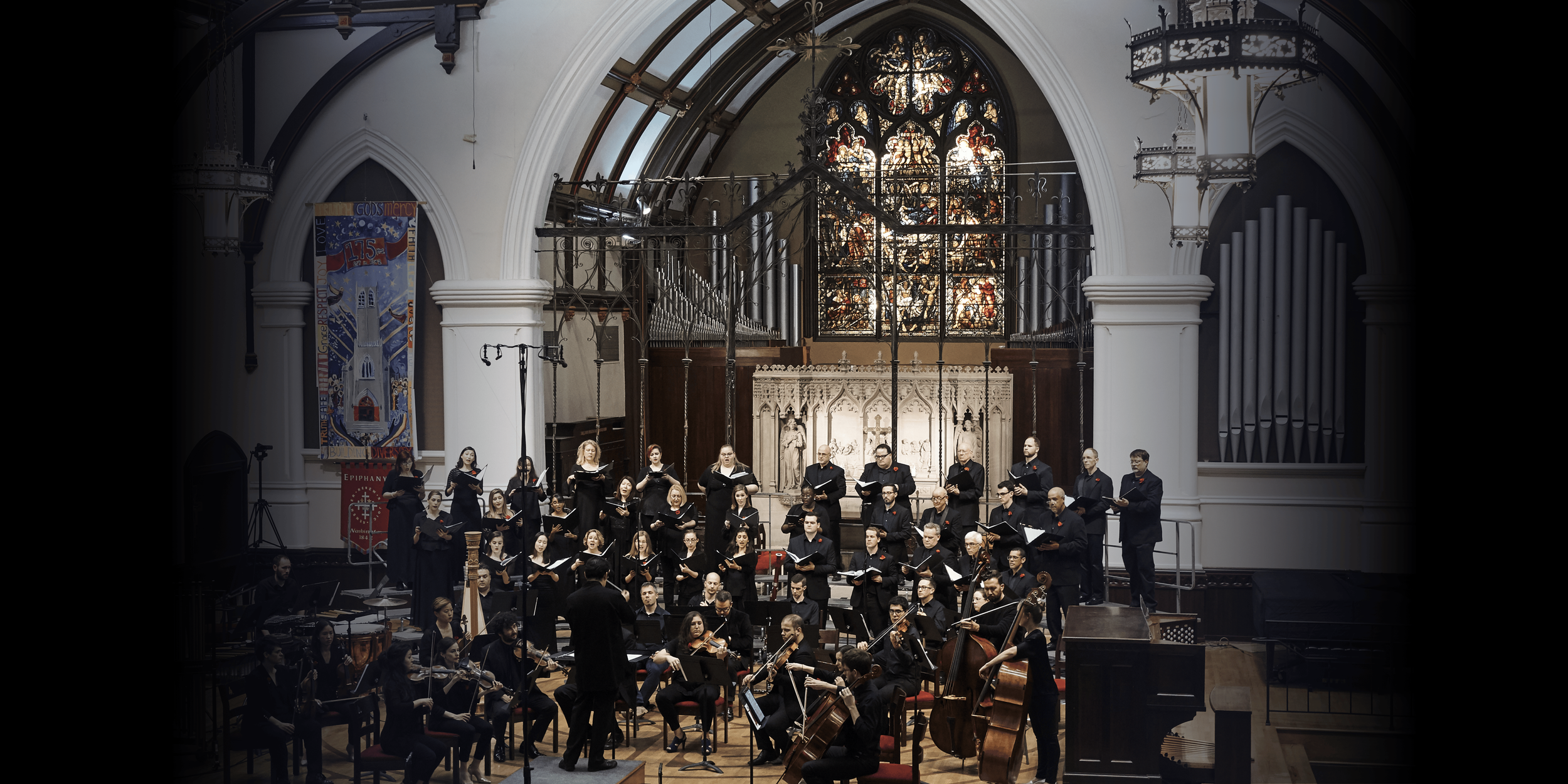
With the forces that we are using to perform it, it’s a little different than most people are used to. For Beethoven’s Ninth Symphony, people usually go to a large concert hall and see a large orchestra with a large chorus. But we’re doing it in a more intimate way, which is probably the way Beethoven would have heard it. Back then, performances didn’t have as many string players; there would just be two or three bass players, for example, and then a few of the other types of strings. After Beethoven’s death, at the end of the 1800s, things became very excessive; you had performances with 300 or 400 people on stage... This was right before WWI, and everything was becoming bigger and bigger. But during Beethoven’s time, performances were smaller and intimate. I think we’re trying to approximate that kind of experience for our audience.
When thinking about this piece and its themes, Beethoven’s own life comes to mind.
Beethoven had a very challenging life. He suffered from physical ailments all his life: his gut, his liver, his eyesight, and of course his ears. He started losing his hearing at the age of 27 and gradually lost more and more of his hearing. By the end, by the time he was in his late 30s, he was almost completely deaf.
You imagine, if you were an athlete and you lost your legs, or if you were a swimmer and you lost your arms. Whatever you are that defines your profession, if you lose it altogether… it must be the most excruciating, frustrating, frightening thing that can happen to anyone. And the fact that he did not stop—the fact that he basically said “This is not going to stop me; I’m just going to get better.” And he did. His greatest compositions came after he became completely deaf.
He was always brilliant in that he knew what he had to give to the world. As a matter of fact, there is this famous document that he wrote that demonstrates this. Beethoven contemplated suicide around age 30 when he learned that his ailment was incurable. He’d tried all kinds of treatments, and nothing would work. Then he went on a retreat to a place called Heiligenstadt and wrote this letter that was never sent to anybody; he just kept it his desk, and it was found after his death. In it, he essentially says, “People misunderstand me; people think that I’m misanthropic because I’m not social, but they don’t understand that I cannot hear.” He couldn’t say to people, “I’m deaf; I’m a great musician but actually I don’t hear anything.” So he kept it to himself, and he wrote this letter for his brothers to find after his death. “I don’t know what I’m doing here, but the thing that stops me from leaving is that I have so much to give as a musician.”
He knew how great he was, and it’s almost like he knew what kind of legacy he was going to leave. The rest of his life after that letter, he was producing the greatest music of his time, even though he could not hear it; he could only hear it in his head. What’s most amazing about this: even though his music was already great, I believe the reason he wrote better music after that was that he had no influences; he could not hear music from other people. So he lived in this inner ecosystem where he had no musical influences from the outside world, and he could only hear his own ideas and conceive his own musical monuments.
Because of this, Beethoven was on a very personal musical journey. He had this extreme need, and it created a strong musical character: when you hear Beethoven, within a few notes you know it’s him, especially the later works. I think it’s because he was completely isolated from the outside world through his deafness. He couldn’t even pluck notes on the piano and try to hear the harmony. What it must be like for somebody to be able to achieve that… It’s like building a monument completely blind. It’s incredible.
The Ode to Freedom, Ode to Joy concert is themed around Black empowerment and the Juneteenth holiday. There is a strong connection between these themes and the music of Beethoven’s Symphony No. 9.
The journey of the piece is from struggle to triumph. What is important in this piece is not just as simplistic as “the beginning is struggle and the end is triumph.” It’s the journey—the journey that you go through and this idea of persevering. I think that’s what the Black community has endured. The struggle—the horrible struggle at the beginning which continues on. Triumph is not really there yet; there’s still struggle. But if you look back, there has been progress. And I think this symphony mirrors that.
I think one of the things that you can say about the Black community is that it’s resilient. In spite of these struggles—this difficult journey that they’ve been through as a people—they’ve overcome. And some of the greatest athletes, musicians, artists, singers are Black, even though they’ve come sometimes from generations and generations of poverty. That perseverance: that sense of “I’m going to achieve things in spite of the odds.” It’s reflected in the piece, and it’s reflected in Beethoven’s life.
Ode to Freedom, Ode to Joy takes place on Friday, June 20.
Ode to Freedom,
Ode to Joy